Date: Thursday, February 5, 2025
Time: 12:45 PM to 1:45 PM
Location:PAIS, Room 2540 and Zoom
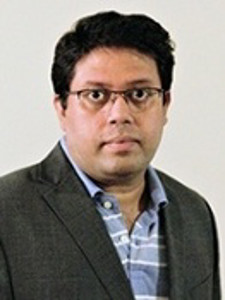
Speaker: Professor Tonmoy Chakraborty, UNM Physics and Astronomy Department
Abstract:
Optical microscopy has transformed our ability to observe life in action—watching cells move, interact, and respond to their environment in real time. Yet, even our most advanced microscopes face critical trade-offs among imaging speed, resolution, and the ability to see deep into intact tissues. These trade-offs become especially challenging when biological events span a huge range of time and space: for example, interactions between cancer cells and their surrounding microenvironment may unfold over seconds or over days, and may occur across entire tissue volumes. To connect these large-scale behaviors with the molecular mechanisms that drive them, we need imaging technologies that can bridge scales—from subcellular structures to whole tissues.
Recent progress in light-sheet microscopy (LSM) has opened the door to deep imaging with reduced photodamage. However, existing LSM platforms still struggle with key limitations, such as restricted sample size, insufficient spatial resolution, and challenges in capturing rapid dynamics. In this talk, I will describe how my laboratory is developing new imaging strategies to overcome these barriers. By engineering next-generation light-sheet and optical remote-focusing systems, we aim to dramatically expand the speed, resolution, and depth at which complex biological systems can be observed. Our long-term goal is to enable studies of living tissues and disease models in truly physiologically relevant 3D environments—moving optical microscopy closer to capturing biology as it naturally unfolds.
Biography:
Dr. Tonmoy Chakraborty is an Assistant Professor of Physics and Astronomy at the University of New Mexico. Prior to academia, he worked as an analytical and metrology engineer at SEMATECH, where he gained industry experience in nanoscale characterization and instrumentation. His research focuses on the development of advanced light-sheet and volumetric microscopy techniques for imaging complex three-dimensional biological systems. His work is supported by major federal funding, including an NSF CAREER Award and an NIH MIRA grant. He is committed to interdisciplinary research, graduate mentorship, and undergraduate education.